Small Steps Big Impact
+32 474 13 78 13
← All AI models
Logo of Meta, the maker of Llama

AI models · Meta

Llama

Llama is Meta's family of open models: you can download the models and run them yourself, on your own server or on a cloud platform. Interesting for custom work and self-hosted setups, but as a European business, mind the licence.

Updated: November 2026Official website: www.llama.com ↗

What it's good at

  • Run it yourself: the models run on your own server or in a cloud of your choice, so your data stays in your own environment.
  • Widely supported: available on major cloud platforms and in tools for running models locally.
  • Adaptable: you can train a model further on your own examples.

What to watch

  • Under the Llama 4 licence, companies with their principal place of business in the EU get no rights to the multimodal models (which also process images). For a Belgian business that means: don't install Llama 4 yourself. Older text models like Llama 3.3 aren't covered by that restriction; have the licence checked before you choose.
  • The licence isn't open source: usage rules apply, and above 700 million monthly users you need a separate licence.
  • In April 2026 Meta released Muse Spark, a closed model. Meta says it will continue Llama, but how the open models evolve is uncertain.
  • Running a model yourself needs suitable hardware and maintenance.

Privacy and your business data

If you run Llama yourself, on your own server or in your own cloud environment, your data doesn't go to Meta. You are then responsible for security and access.

The Meta AI assistant in WhatsApp, Instagram and Messenger is a consumer service and not meant for business data.

Which version for your business?

Self-hostedFree-to-download models on your own hardware: full control, but your own maintenance.
Through a cloud platformLlama through a cloud provider in a European region, without your own servers.
Meta AI appPersonal use in Meta's apps. Not for business data.

How we use it with clients

  • Advice on open models: which model you may and can run as a Belgian business, Llama or an alternative such as Mistral.
  • Local AI for sensitive documents, on hardware in your office or in a European cloud.
  • Automations in n8n with a self-hosted model, so documents never leave your environment.
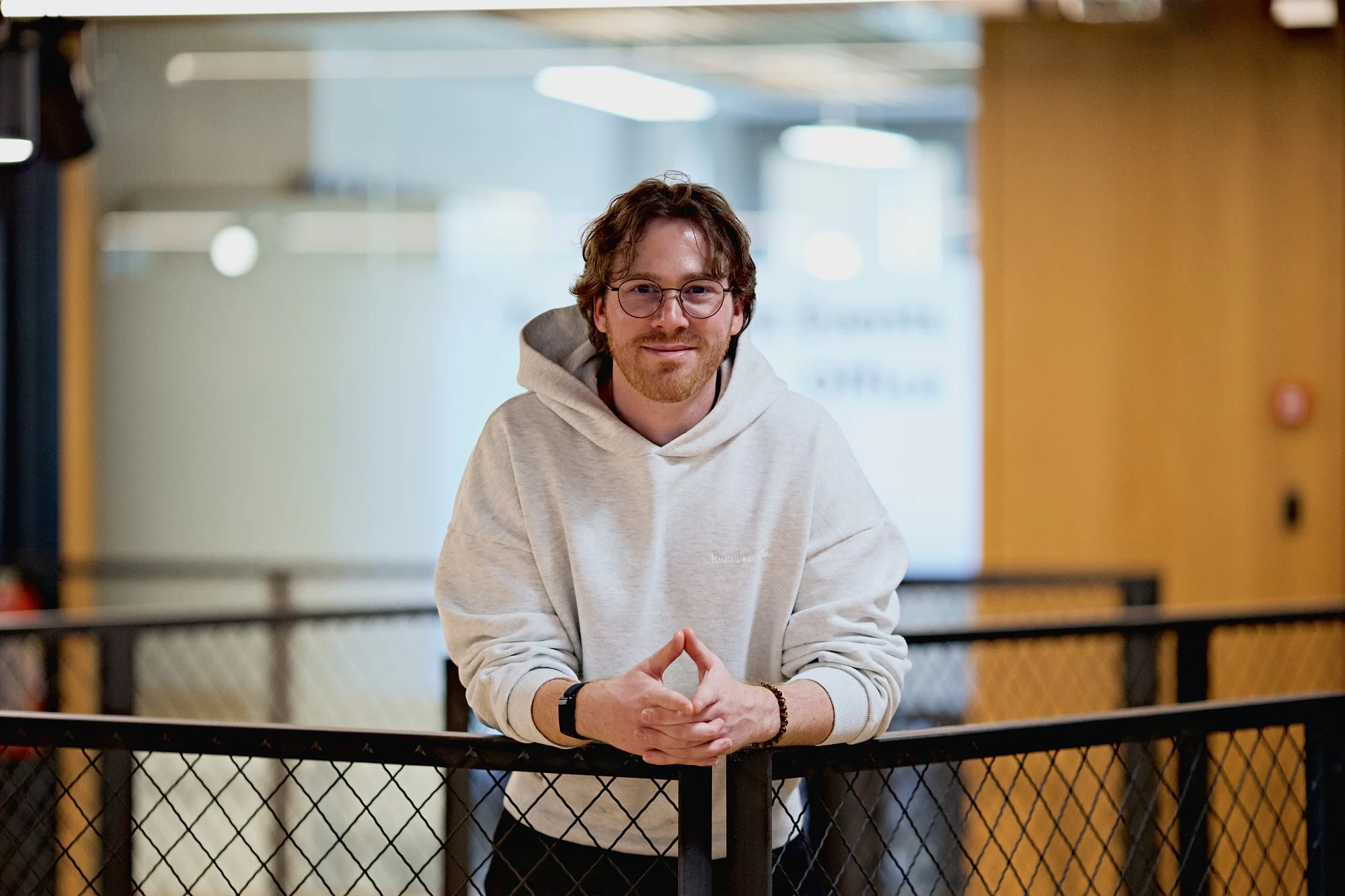
Senne Wellens, founder of Small Steps Big Impact, leaning on a railing at Corda Campus
Senne Wellens, founder of Small Steps Big Impact. You talk directly with him about which AI fits your business.

Frequently asked questions

Is Llama open source?

Not by the Open Source Initiative's definition. The models are free to download and use, but under Meta's own licence with usage rules and a limit of 700 million monthly users.

May a Belgian business use Llama 4?

Under the Llama 4 licence, companies with their principal place of business in the EU get no rights to the multimodal models, and Llama 4 is multimodal. End users may use services that contain those models. Older text models like Llama 3.3 don't have that restriction. Have the licence checked before you choose.

What is the difference with Mistral?

Both offer models you can run yourself. Mistral is a European company and part of its models is under an open licence without an EU restriction; for Belgian businesses that is often simpler.

Other models

Next step

See where the gains are.

Ready for your first small step?

Book an intro call with Senne. No strings attached.
Either way you leave with a few concrete pointers.
Senne Wellens of Small Steps Big Impact in a video call at his desk
FAQ

Questions we get a lot.

Not answered here?
01What we do

Small Steps Big Impact automates internal business processes with AI, connections between systems and custom software. We always start with an on-site screening. That way we only automate what saves time or earns money, and not what happens to be possible.

Mainly for SMEs with 5 to 30 employees where the same data is entered in several systems. Think of installation companies, technical maintenance, machine service and facility services. The more work happens on site or at the customer, the bigger the gain.

Usually quote follow-up, planning, registration of work orders, post-calculation per project or contract, invoicing based on actual work and product data from suppliers. Which process comes first we decide after the screening, based on impact.

Yes. Besides automation we give AI workshops and guide teams in using AI day to day. That way you get a return from AI without starting a full trajectory right away.

02Approach and trajectory

A screening is a two-hour session at your location. We map your processes, speak with the people who do the work and prioritise what pays off most. You get a report with findings and a 30-minute follow-up call. You are not committed to anything.

In the blueprint we set out exactly what the process, the data and the connections look like before we build. Blueprint and build always go together. That way what we build is really what you need.

Workflow automation connects existing tools and takes over recurring steps. Custom software is an application of your own, for example a field service tool, in which those automations are already built in. The screening shows which of the two fits.

One clearly defined process is often live in less than a month. A trajectory across several chains, such as sales, planning and stock, takes more like three to four months.

With a Care subscription we monitor your automations monthly, solve problems and adjust when a tool changes. Without maintenance a connection does not keep working forever either.

03Tools, team and cost

Not necessarily. We work independently of tools and prefer to connect the software you already use through APIs. We only build custom software when existing platforms do not carry your process well.

No. We build around the way your team already works today and speak with the people on the floor during the screening. That is why the solution feels to them like less work and not like an extra system.

That depends on the number of processes and on whether existing tools are enough or custom software is needed. After the screening you know exactly what we propose and what it brings in, so you decide based on your own figures and not on a standard package.

Yes. Your data stays yours and stays in your own systems: we work as much as possible within the tools you already use and follow the GDPR. Licences and access stay in your company's name where possible, we never share data with third parties, and access we no longer need is removed after the project.

Yes. We work for companies in Belgium, the Netherlands and beyond, from Limburg. Up to 90 minutes' drive we come on site, further away we work digitally or on site by request.

Not answered here?