Small Steps Big ImpactLimburg · BE
001Screening the tools
002Mapping handovers
003Drawing the blueprint
004Connecting Attio · Notion · n8n
005Running the first workflow
006Ready
0%
Small Steps Big Impact
+32 474 13 78 13
CLIENT CASE / Guides & Use CasesSSBI-CS-2501 · February 2025 · less than a month

Field service tool with post-calculation and purchasing control

Execution
February 2025, less than a month
Team
Two people
Discipline
Process automation with SaaS platforms and API integrations

An operational company invoiced and ordered on estimates, because what happened on site was not recorded anywhere in a structured way. In less than a month the chain that closes that was in place.

The difference is in the moment of recording. Everything that comes after, from invoice to order, follows from that.

Summary

Work and material consumption on site were not registered in a structured way, which meant invoicing and purchasing happened on estimates. We set up a field service tool with existing SaaS platforms, connected by API to the software that was already there. Employees register every completed step of a project on site, those registrations are turned into a post-calculation per project, and consumption is made available on an annual basis as management information for purchasing.

Starting point

With work away from the office, the truth about a project sits with the people carrying it out. What exactly was done, how long it took and what was consumed happens on site and not at the office. If that is not recorded at the moment itself, after a few days it only exists as a memory. That was precisely the case here.

That affects two processes at once, and they are exactly the two where the money passes. Invoicing starts from what people think they delivered instead of from what was actually delivered. Purchasing orders on gut feeling, because actual consumption does not exist as a figure anywhere. Both problems have the same cause, and therefore the same solution.

Building blocks

The platforms used are not named in this document. We explain the technical choices and connections in a conversation.

Existing SaaS platformsNo custom software was written. The tool runs on existing platforms that we configured around the process, which partly explains the short lead time.
Central registrationProjects, work and material consumption stored in a structured way, so every registration hangs on a project and stays retrievable.
API integrationsConnections between the software the company already used, so the same data does not have to be entered twice and the chain closes.
Reporting and dashboardsPost-calculation per project for invoicing, and an annual consumption overview as a basis for purchasing.

Result

Invoicing starts from work actually delivered, so an invoice is defensible when a customer asks about it. The project is transparent afterwards, so it becomes visible what an assignment actually cost instead of what it should have cost. And purchasing gets annual consumption as a figure in hand, which means orders match actual consumption more closely and cash flow improves.

Applicability. This pattern is not sector-bound.

It shows up in every organisation where people work outside the office, where time and materials are consumed on location and where administration afterwards has to reconstruct what happened. A company repairing floors, an installer, a technical service or an agency sending crews and materials to a location: the same three breaking points every time.

RegistrationWhat happens on location is not recorded there.
Post-calculationThe assignment cannot be recalculated afterwards, so the margin remains a suspicion.
ControlPurchasing and planning work on gut feeling, because total consumption cannot be requested anywhere.

Way of working

We do not start with software. Every trajectory starts with a screening: interviews on site with the people who do the work, a mapping of the process as it really runs today, and a prioritisation of what should be tackled first. Only then do we determine what gets built, how big it gets and in which order it is rolled out. The most expensive mistake in this kind of project is building a tool around a process nobody has properly mapped out.

That order also determines the budget. After the screening you know what needs to be built and what it costs, instead of having to decide up front about something that is not yet sharp.

More cases
CRM implementation with a multi-company setupSSBI-CS-2201 · 2022 – 2024 · IT and technologyFrom request to post-calculation in one continuous processSSBI-CS-2403 · November 2024 · sales, routes, post-calculation and product data
Next step

See where the gains are.

Ready for your first small step?

Book an intro call with Senne. No strings attached.
Either way you leave with a few concrete pointers.
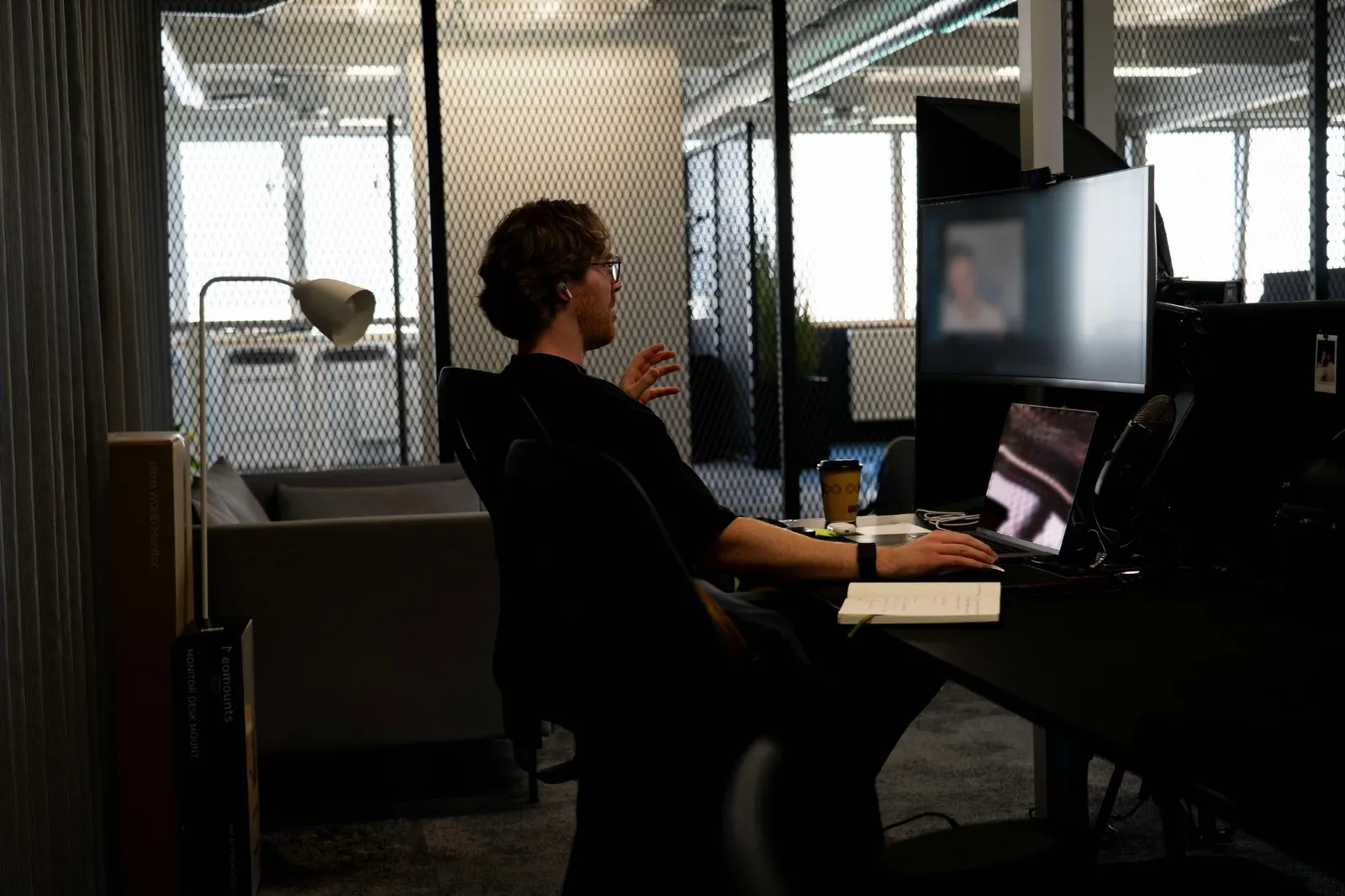
Senne Wellens of Small Steps Big Impact in a video call at his desk
PreviousFrom request to post-calculation in one continuous process
FAQ

Questions we get a lot.

Not answered here?
01What we do

Small Steps Big Impact automates internal business processes with AI, connections between systems and custom software. We always start with an on-site screening. That way we only automate what saves time or earns money, and not what happens to be possible.

Mainly for SMEs with 5 to 30 employees where the same data is entered in several systems. Think of installation companies, technical maintenance, machine service and facility services. The more work happens on site or at the customer, the bigger the gain.

Usually quote follow-up, planning, registration of work orders, post-calculation per project or contract, invoicing based on actual work and product data from suppliers. Which process comes first we decide after the screening, based on impact.

Yes. Besides automation we give AI workshops and guide teams in using AI day to day. That way you get a return from AI without starting a full trajectory right away.

02Approach and trajectory

A screening is a two-hour session at your location. We map your processes, speak with the people who do the work and prioritise what pays off most. You get a report with findings and a 30-minute follow-up call. You are not committed to anything.

In the blueprint we set out exactly what the process, the data and the connections look like before we build. Blueprint and build always go together. That way what we build is really what you need.

Workflow automation connects existing tools and takes over recurring steps. Custom software is an application of your own, for example a field service tool, in which those automations are already built in. The screening shows which of the two fits.

One clearly defined process is often live in less than a month. A trajectory across several chains, such as sales, planning and stock, takes more like three to four months.

With a Care subscription we monitor your automations monthly, solve problems and adjust when a tool changes. Without maintenance a connection does not keep working forever either.

03Tools, team and cost

Not necessarily. We work independently of tools and prefer to connect the software you already use through APIs. We only build custom software when existing platforms do not carry your process well.

No. We build around the way your team already works today and speak with the people on the floor during the screening. That is why the solution feels to them like less work and not like an extra system.

That depends on the number of processes and on whether existing tools are enough or custom software is needed. After the screening you know exactly what we propose and what it brings in, so you decide based on your own figures and not on a standard package.

Yes. Your data stays yours and stays in your own systems: we work as much as possible within the tools you already use and follow the GDPR. Licences and access stay in your company's name where possible, we never share data with third parties, and access we no longer need is removed after the project.

Yes. We work for companies in Belgium, the Netherlands and beyond, from Limburg. Up to 90 minutes' drive we come on site, further away we work digitally or on site by request.

Not answered here?